





The Limits of Vision
Robert Irwin
Robert Irwin
Finally available again in the United States, The Limits of Vision is Robert Irwin's irrepressibly entertaining and imaginative novel about a young housewife named Marcia and the war she wages against dirt. Set over the course of a single day as Marcia goes about her quotidian activities-having the girls over for coffee, tidying the house, making dinner-it becomes increasingly clear that her sanity is unraveling at an alarming rate. Irwin is at his creative best here, as he describes Marcia's conversations with Mucor, the "mouthpiece for the Dirt, the Empire of Decay and Ruin, the Principle of Evil," as well as such scientists and artists of the past as William Blake, Charles Dickens, Leonardo da Vinci, and Charles Darwin. From Publishers WeeklyIf a world can be seen in a grain of sand, then surely phobia can be found in a handful of dust, or so contends obsessed British housewife Marcia, as she does endless battle with dandruff, the carapaces of roaches, grease, rust, grit, the whole panoply of household detritus. Terrorized by the imminent arrival of her coffee-morning ladies, she vacuums the carpet, only to be bested by the spirit Mucor, whose Latin name embodies all elements of slime and grime and who tries to entice her into the kingdom of filth over which he rules. To avoid him she enters the dazzling cleanliness of the Pieter de Hooch canvas hanging on her wall, invoking de Hooch and a raft of other geniusesDarwin, Teilhard de Chardin, Leonardo, Blake, Dostoyevski, even Jesusto assist her. The coffee-morning ladies arrive; she half-listens to their prattle while impatiently waiting for them to leave so she can attack the dishes they have dirtied. Soon her husband, whom she suspects of having an affair with one of the ladies, will come home; how can she defeat Mucor before that moment? The solution is in perfect harmony with this astonishing work of imagination and erudition by a former professor of medieval history. Copyright 1987 Reed Business Information, Inc. Review"Binds together philosophy and mayhem . . . The Limits of Vision ran
Read online
Night and Horses and the Desert
Robert Irwin
Robert Irwin
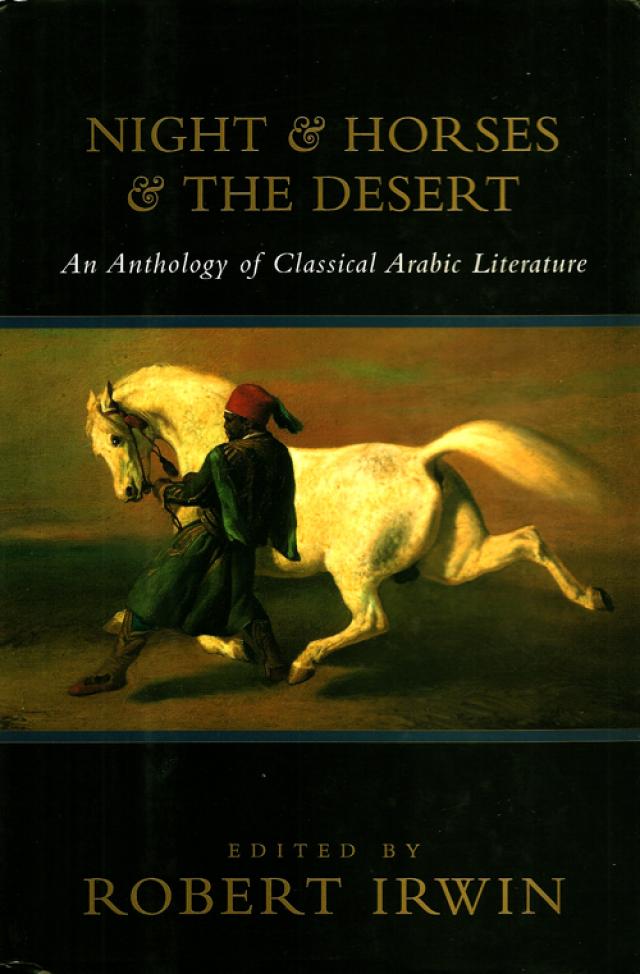
The first collection of poetry and prose from a rich and all too unfamiliar literary tradition.Spanning the fifth to the sixteenthcenturies, from Afghanistan to Spain, Night and Horses and the Desert includes translated extracts from all the major classics in an invaluable introduction to the subject. Robert Irwin has selected a wide range of Arabic poetry and prose in translation, from the most important and typical texts to the very obscure.Alongside the extracts, Irwin s copious commentary and notes provide an explanatory history of Arabic literature. What were the various genres and to what extent were they constrained by rules What were the canons of traditional Arabic literary criticism How were Arabic prose and poetry recited and written down Irwin explores the literary environments of the desert, salon, mosque, and bookshop and provides brief biographies of the caliphs, princesses, warriors, scribes, dandies, and mystics who created such a rich and diverse...
Read online

The Penguin Anthology of Classical Arabic Literature
Robert Irwin
Robert Irwin
Spanning the fifth century to the sixteenth, and ranging from Afghanistan to Spain, this unique collection provides a profound insight into the sheer vitality and depth of Classical Arabic literature. From the earliest surviving fragments of The Thousand and One Nights to the elegant beauty and profound power of the Qur'an - believed by the Islamic faith to contain the actual words of Allah - it includes translated extracts from all the major works of the period, alongside many less well-known but equally fascinating pieces. Exploring such traditional themes as lovesick yearning and fated doom, and considering subjects as diverse as the etiquette of falling in love with slave-girls and the terrors of the sea, this compelling anthology of poetry and prose brilliantly illuminates a body of writing that has been unjustly neglected by the west for centuries.
Read online

Satan Wants Me
Robert Irwin
Robert Irwin
The story revolves round the angelic and mysterious hermaphrodite Seraphita who seems to inspire love in all she meets. One of Balzac's most unusual novels which will appeal to lovers of the mystical and the supernatural Seraphita will be my master stroke. One can create a Goriot every day but one creates a Seraphita only once in a lifetime. Honore de Balzac Never di Balzac approach the very ideal of Beauty as in this book. Theophile Gautier Honore Balzac (1799-1850) studied law but in 1819 he abandons his legal studies and begins writing . He was a prolific author and in 1839 he begins to think of La Comedie humaine, a grandiose structure which will bring together all the novels he has written and many which he is contemplating for the future. Dedalus published two of the most unusual books in La Comedie humaine, both written in 1834, Seraphita (which includes Louis Lambert and The Exiles) and The Quest of the Absolute. Mike Mitchell has been a freelance literary translator...
Read online
Prayer-Cushions of the Flesh
Robert Irwin
Robert Irwin
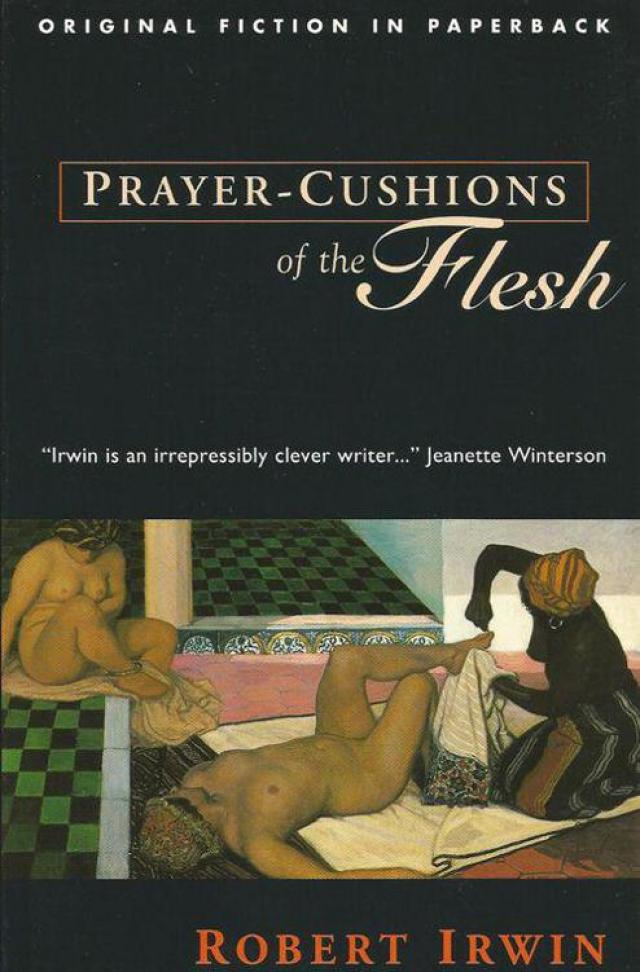
“The virginal hero of the tale, Prince Orkhan, escapes from the Cage of the Imperial Harem, in which the sons of the sultan are imprisoned, and finds himself hailed by the Harem’s concubines as their new Sultan. He is immediately caught up in the excesses and perversions of the harem.” But evil flourishes in a bed of boredom and, after allowing the Viper to drink at the Tavern of the Perfume-Makers, Orkhan enters a maze of complicated relationships, all orchestrated by the devotees of the Prayer-Cushion movement. Temptation, seduction, story-telling, and magic are used to lure the Sultan towards a climax which is designed to be both ecstatic and fatal.
Read online

The Arabian Nightmare
Robert Irwin
Robert Irwin
The hero and guiding force of this epic fantasy is an insomniac young man who, unable to sleep, guides the reader through the narrow streets of Cairo-a mysterious city full of deceit and trickery. He narrates a complex tangle of dreams and imaginings that describe an atmosphere constantly shifting between sumptuously learned orientalism, erotic adventure, and dry humor. The result is a thought-provoking puzzle box of sex, philosophy, and theology. Reminiscent of Italo Calvino, and Umberto Eco, this cult classic is finally back in print! From Publishers WeeklyIrwin's reissued 1983 classic combines the genres of travelogue, fable, dream narrative, novel and confessional into one beguiling whole. Balian, an English spy hired by France to go on a fact-finding mission to Cairo in 1486, is surprised when one of his fellow travelers is kidnapped. He is even more surprised when he is afflicted by the "Arabian Nightmare": he begins to have very confusing dreams and wakes up bleeding from the nose and mouth. A mysterious figure named the Father of the Cats claims to want to help Balian but does he? To make matters worse, there are rumors that a vicious murderer is on the loose in Cairo. Every attempt Balian makes to leave the city is foiled, as one supposedly well-intentioned figure after another leads him into the ever-deepening maze of the city's underworld, populated by whores, laughing dervishes, talking apes and lepers who all weave their respective spells with distinct power. Moving gracefully through a boggling number of reversals, stories-within-stories, and false solutions, the narrative winds its way toward a conclusion as baffling and profound as everything that has preceded it. There are plenty of moments when the story becomes too confusing to follow but this is clearly part of the plan. A work of fiction with the subtle, intoxicating architecture of a poem, this cult favorite clearly deserves renewed exposure and consideration. B&w illus. Copyright 2002 Cahners Business Information, Inc. From Library JournalThis fascinating, rather complex first novel by a former medieval historian can be read on several levels. On the surface it is the picaresque tale of a young English pilgrim's trials and tribulations in late-15th-century Cairo. Recruited as a spy by the French king, he finds himself, or believes himself to be, pursued both during his waking and sleeping hours by an odd assortment of characters, from an old Egyptian magician to a leperous Christian knight. But the story is also a philosophic fantasyan exploration into the nature of dreams and storytelling and the ways in which they interface. Or is it really a journey into the schizophrenic mind where phantoms replace reality? While earthy and often quite humorous, the novel's intricacy is likely to put off the general reader. Those who like a challenge, however, will find their perseverance amply rewarded. David W. Henderson, Eckerd Coll. Lib., St. Petersburg, Fla.Copyright 1987 Reed Business Information, Inc.
Read online

For Lust of Knowing
Robert Irwin
Robert Irwin
Robert Irwin's history of Orientalism leads from Ancient Greece to the present. He shows that, whether making philological comparisons between Arabic and Hebrew, cataloguing the coins of Fatimid Egypt or establishing the basic chronology of Harun al-Rashid's military campaigns against Byzantium, scholars have been unified not by politics or ideology but by their shared obsession. For Lust of Knowing is an extraordinary, passionate book, both a sustained argument and a brilliant work of original scholarship.
Read online

Exquisite Corpse
Robert Irwin
Robert Irwin
More information to be announced soon on this forthcoming title from Penguin USAAmazon.com ReviewExquisite Corpse is a novel, a survey of World War II history, and a commentary on surrealist art, all in one; and due to author Robert Irwin's immense skill, it does a crackerjack job with all three. The story opens in 1930s England, where Caspar, an ardent devotee of surrealism, leads a happily bohemian life. He paints his mediocre pictures, meets with his fellow surrealists in the Serapion Brotherhood, and generally subscribes to the belief that the anarchy of surrealism will lead to liberation of the imagination. Then he meets Caroline, a woman so relentlessly ordinary that she is nothing short of exotic to Caspar. He falls instantly in love with her and for a time revels in her middle-class life: her job as a secretary, her passion for amateur theatricals, her shopping excursions into department stores. When Caroline disappears from Caspar's life, he is thrown into--dare we say it?--a surreal search for her that will take him to Nazi Germany, into a mental hospital, through the war years, and eventually into the concentration camps and out again. Journeys such as Caspar's are often labeled picaresque, and indeed, if Don Quixote had been a surrealist, his adventures might have resembled these. What makes Exquisite Corpse so enjoyable is the confidence with which Irwin threads history and art criticism through this comic romp. From Publishers WeeklyLike a conjurer, Irwin (The Arabian Nightmare) performs deft sleight-of-hand tricks with the concept of perspective in this brilliant and mischievous novel. A British surrealist painter named Caspar looks back at events between 1936 and 1952 and records a story of romantic obsession. The artist/writer considers his tale an "anti-memoir" because he distrusts his own memory, infected as it is by a hyperactive imagination. He begins by recalling his life in London, Paris and Munich during the 1930s, when he was deeply involved with a bohemian community of surrealist writers, artists and hangers-on dedicated to shocking bourgeois society out of its lethargy. Caspar's life changes dramatically when he falls in love with Caroline, a typist who quickly adapts to her "spiffing adventure" among the surrealists. (The large cast of fictional characters is augmented by a number of celebrities of the time, including Gala Dali, Paul Eluard and Andre Breton.) Caspar adores Caroline, paints her, even offers to abandon his art and go into business if she will only have him. She politely fends off his attentions; but, when she suddenly vanishes, he is devastated. Even time spent in a madhouse and his experiences during the war fail to diminish his obsession for her. Under Irwin's skillful touch, Caspar becomes the ultimate irony: an artist who lacks perspective and a surrealist devoid of any true appreciation for the absurdities of life. Irwin has fashioned a devilishly clever plot, masked it with an eccentric cast and a narrator of dubious authority, then enhanced the work with a prose style that is intelligent and crisp in its execution. Copyright 1998 Reed Business Information, Inc.
Read online