Suspects

Suspects

David Thomson

David Thomson

Noah Cross, Norma Desmond, Norman Bates, Harry Lime - these are a few of nearly a hundred names that inhabit the mind of the narrator as he starts to compose short biographies of some of the most famous characters in the history of film noir. He sketches in whole lives, lives as intense as the dreams put up on the screen. Then these characters start to meet each other outside the films as if they were real people with real needs and passions. The book is becoming a novel. The names and faces are familiar to us - Jake Gittes from Chinatown, Laura Hunt and Waldo Lydecker from Laura Rick and Ilsa from Casablanca - but is it true that Noah Cross and Norma Desmond were lovers in the twenties, that she and Joe Gillis had a son who grew up to be Julian Kay in American Gigolo? For the narrator is not merely the author. Married to the sister of Laura Hunt, he has a mission to carry out, a lost family link to find, a thread to pull so that nearly all these disparate characters come together...
Read online
  • 451
The People of the Sea

The People of the Sea

David Thomson

David Thomson

Introduced by Seamus Heaney. David Thomson’s travels in the Gaelic world of the Hebrides and the west coast of Ireland brought him into contact with a people whose association with the sea and its fertile lore runs deep. They told of men rescued by seals in stormy seas, of babies suckled by seal-mothers, and of men who took seal-women for wives – stories centuries old, handed down to them by their forefathers. These mysterious and fascinating legends retain their spell-binding enchantment through the luminous quality of David Thomson’s prose. From an early age, he was fascinated by the mysterious interaction between man and the sea. In the Selkie legends he found the perfect expression of a Celtic world where truth and fiction intertwine, and his book is a window onto that vanished world. ‘The People of the Sea survives not as a period piece but as a poetic achievement . . . readers will be carried away on successive waves of pleasure . . . these stories have an irresistible...
Read online
  • 351
How to Watch a Movie

How to Watch a Movie

David Thomson

David Thomson

From one of the most admired critics of our time, brilliant insights into the act of watching movies and an enlightening discussion about how to derive more from any film experience. Since first publishing his landmark Biographical Dictionary of Film in 1975 (now in its sixth edition), David Thomson has been one of the most trusted authorities on all things cinema. Now, he offers his most inventive exploration of the medium yet: guiding us through each element of the viewing experience, considering the significance of everything from what we see and hear on screen - actors, shots, cuts, dialogue, music - to the specifics of how, where, and with whom we do the viewing. With customary candour and wit, Thomson delivers keen analyses of a range of films from classics such as Psycho and Citizen Kane to contemporary fare such as 12 Years a Slave and All Is Lost, revealing how to more deeply appreciate both the artistry and (yes) manipulation of film,...
Read online
  • 70
Warner Bros

Warner Bros

David Thomson

David Thomson

Behind the scenes at the legendary Warner Brothers film studio, where four immigrant brothers transformed themselves into the moguls and masters of American fantasyWarner Bros charts the rise of an unpromising film studio from its shaky beginnings in the early twentieth century through its ascent to the pinnacle of Hollywood influence and popularity. The Warner Brothers—Harry, Albert, Sam, and Jack—arrived in America as unschooled Jewish immigrants, yet they founded a studio that became the smartest, toughest, and most radical in all of Hollywood. David Thomson provides fascinating and original interpretations of Warner Brothers pictures from the pioneering talkie The Jazz Singer through black-and-white musicals, gangster movies, and such dramatic romances as Casablanca, East of Eden, and Bonnie and Clyde. He recounts the storied exploits of the studio's larger-than-life stars, among them Al Jolson, James Cagney,...
Read online
  • 63
'Have You Seen...?'

'Have You Seen...?'

David Thomson

David Thomson

This is possibly the most entertaining, surprising and enjoyable film book ever written. Thomson set himself the near-foolhardy task of writing one page each on 1000 of the films that he has particularly liked - or in some cases, abhorred. Some half-million words of funny, vigorous, wayward prose later, we are all the happy beneficiaries of his deranged labour. Always unexpected, never repetitive, 'Have You Seen.?' can be read consecutively - from Abbott and Costello Meet Frankenstein to Zabriskie Point - or dipped into over many years, and it is a masterclass in how to write about films and how to love them. Sometimes Thomson will be interested in the director, sometimes in the culture that made such a film possible at such a time, sometimes in the stars (always in the stars, to be honest), and sometimes even in the outrageous cynicism and corruption of most financial backers. 'Have You Seen.?' is crammed with great...
Read online
  • 60
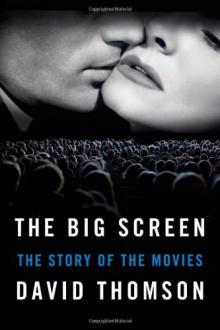
The Big Screen - The Story of the Movies

The Big Screen - The Story of the Movies

David Thomson

David Thomson

The Big Screen tells the enthralling story of the movies: their rise and spread, their remarkable influence over us, and the technology that made the screen—smaller now, but ever more ubiquitous—as important as the images it carries.The Big Screen is not another history of the movies. Rather, it is a wide-ranging narrative about the movies and their signal role in modern life. At first, film was a waking dream, the gift of appearance delivered for a nickel to huddled masses sitting in the dark. But soon, and abruptly, movies began transforming our societies and our perceptions of the world. The celebrated film authority David Thomson takes us around the globe, through time, and across many media—moving from Eadweard Muybridge to Steve Jobs, from Sunrise to I Love Lucy, from John Wayne to George Clooney, from television commercials to streaming video—to tell the complex, gripping, paradoxical story of the movies. He tracks the ways we were initially enchanted by movies as imitations of life—the stories, the stars, the look—and how we allowed them to show us how to live. At the same time, movies, offering a seductive escape from everyday reality and its responsibilities, have made it possible for us to evade life altogether. The entranced audience has become a model for powerless and anxiety-ridden citizens trying to pursue happiness and dodge terror by sitting quietly in a dark room.Does the big screen take us out into the world, or merely mesmerize us? That is Thomson’s question in this grand adventure of a book. Books about the movies are often aimed at film buffs, but this passionate and provocative feat of storytelling is vital to anyone trying to make sense of the age of screens—the age that, more than ever, we are living in.**From BooklistStarred Review Veteran essayist Thomson’s thoughtful new book is not just the story of traditional cinema; the “screen” of the title refers not only to the silver screen of the movies, but also to television and beyond. Early on, he draws a fascinating parallel between the viewing experience of Edison’s nickelodeon, a single person watching a short film loop through a viewfinder, to the way we now watch YouTube-length clips on our computer screens, whether tablet- or smartphone-size. But does the vacuum of “watching alone” merely stimulate our proclivity for fantasy and illusion? How has 100 years of watching movies affected our ability to handle realities outside the screen? Every page is studded with provocative questions meant to goad readers into rethinking common assumptions. For much of the book, he co-opts the approach of his earlier tome, The New Biographical Dictionary of Film (2010), sketching thumbnail portraits of dozens of historical figures: Eadward Muybridge, John Ford, Ingrid Bergman, Akira Kurosawa, Lucille Ball, George Lucas, Quentin Tarantino, and others. The way he strings these cameos together thematically rather than chronologically will prove maddening to anyone wanting a straightforward history. But if the most important quality of a book about the movies is that it triggers a craving to reexamine the movies themselves, then Thomson’s book is a spectacular success. --Rob Christopher From BookforumThis is Thomson at his best: holding his jewels, singly, to the light and finding unglimpsed facets. If you haven’t seen, say, Boudu Saved from Drowning or A Man Escaped or Hiroshima mon amour or Sunrise or Metropolis, The Big Screen will make you want to. And even if you’ve seen them, you may want to go back, because a movie is no longer quite the same once it’s been viewed through Thomson’s exacting lens. It is, in fact, this fine analytical grain, coupled with Thomson's penchant for eccentric judgments and rhetorical excess, that make him so ill suited to the historical-survey format of The Big Screen. The obligations of chronology force him into bizarre conjunctions, yoking noir to the musical and Max Ophuls to Robert Bresson. —Louis Bayard
Read online
  • 42
183