

The cicada tree, p.1
THE CICADA TREE, page 1


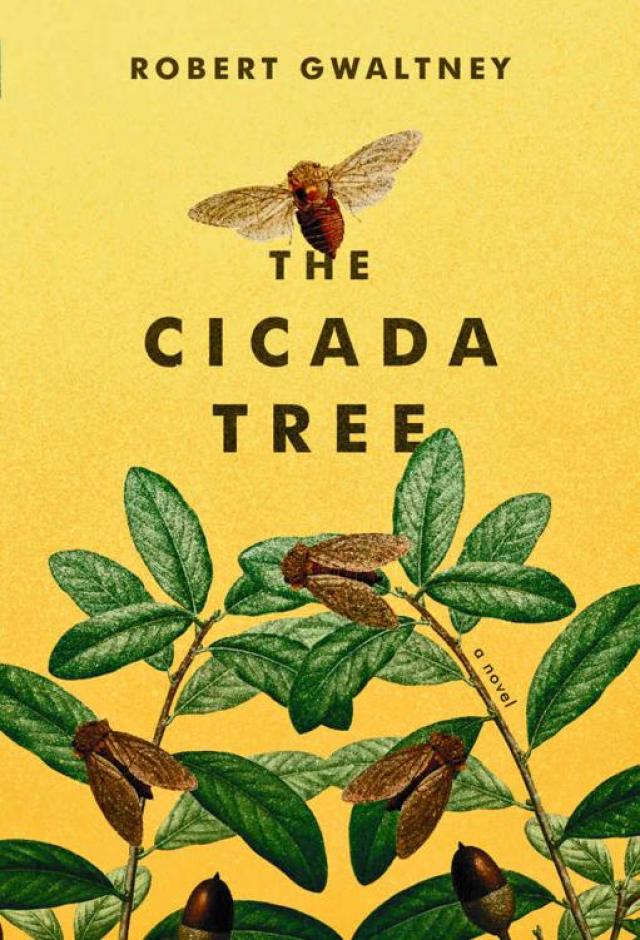
WHEN AN ELEVEN-YEAR-OLD, WHISKY DRINKING, PIANO PRODIGY ENCOUNTERS A WEALTHY FAMILY POSSESSING SUPERNATURAL BEAUTY, HER ENSUING OBSESSION UNLEASHES FAMILY SECRETS AND A CATACLYSMIC PLAGUE OF CICADAS.
The summer of 1956, a brood of cicadas descends upon Providence, Georgia, a natural event with supernatural repercussions, unhinging the life of Analeise Newell, an eleven-year-old piano prodigy. Amidst this emergence, dark obsessions are stirred, uncanny gifts provoked, and secrets unearthed.
During a visit to Mistletoe, a plantation owned by the wealthy Mayfield family, Analeise encounters Cordelia Mayfield and her daughter Marlissa, both of whom possess an otherworldly beauty, a lineal trait regarded as that Mayfield Shine. A whisper and an act of violence perpetrated during this visit by Mrs. Mayfield all converge to kindle Analeise’s fascination with the Mayfields.
Analeise’s burgeoning obsession with the Mayfield family overshadows her own seemingly, ordinary life, culminating in dangerous games and manipulation, setting off a chain of cataclysmic events with life-altering consequences—all of it unfolding to the maddening whir of a cicada song.
What People are Saying about THE CICADA TREE
“Following in the magnificent footsteps of Carson McCullers and Harper Lee, Robert Gwaltney creates a wonderful snapshot of the friendship that forms between Analeise and Etta Mae, two eleven-year-old girls in ‘50s small town Georgia… This is a book to love and remember, and every book club in America would be wise to snap it up.”—
Robert Goolrick, #1 New York Times bestselling author
“The gothic beauty of a relentless Georgia summer is brought to life through Gwaltney’s deliberate details and exquisite imagery, while all the while evil lurks beneath the surface; from where or what the reader does not know but is as convinced by Gwaltney’s expert storytelling as he is.”—Zoe Fishman, bestselling author of Invisible Air and Georgia Author of the Year 2020
“This is Southern Gothic with a vengeance—a dark blast of family secrets, strained loyalties, and bitter betrayals. We follow young Analeise Newell with fear and hope, dreading what may happen to her even as we turn the pages. Robert Gwaltney is a writer to watch.”—Christopher Swann, author of A Fire In The Night
“Gwaltney’s Southern Gothic, THE CICADA TREE mesmerizes and seduces, the language redolent and deadly, the characters steeped in secrets and madness, and the whole of it an enthralling and perfect read. Easily my favorite book of the year.”—Kim Taylor Blakemore, bestselling author of After Alice Fell
"In his novel, Gwaltney assembles some classic ingredients of the Southern gothic tradition, with Analeise’s world being haunted by death, madness, the past, and the supernatural...the eerie tone is well orchestrated for those who appreciate a sinister frisson."–Kirkus Reviews
THE CICADA TREE
Robert Gwaltney
Moonshine Cove Publishing, LLC
Abbeville, South Carolina U.S.A.
First Moonshine Cove Edition January 2022
Copyright 2022 by Robert Gwaltney
This eBook is also available in print (ISBN: 9781952439247) at online retailers and quality book stores. This eBook is licensed only for your personal enjoyment. The license does not allow you to resell it or give it to other people. If you would like to share it with another person, please purchase an additional copy for each recipient. If you are reading this book and did not purchase it, please purchase your own copy. Thank you for respecting the hard work and intellectual property of the author and publisher.
All rights reserved. No part of this book may be reproduced in whole or in part without written permission from the publisher except by reviewers who may quote brief excerpts in connection with a review in a newspaper, magazine or electronic publication; nor may any part of this book be reproduced, stored in a retrieval system or transmitted in any form or by any means electronic, mechanical, photocopying, recording or any other means, without written permission from the publisher.
Cover and interior design by Moonshine Cove staff, cover image by Ebook Launch.
To Mama and all my ghosts
And Timothy, always.
About the Author
Raised alongside three feral, younger brothers in the rash-inducing, subtropical climate of Cairo, Georgia, Robert Gwaltney is a lifelong resident of the South—a circumstance that has left an indelible mark upon his voice as a writer,
A graduate of Florida State University, Robert Gwaltney resides in Atlanta, Georgia. By day, he serves as Vice President of Easter Seals North Georgia, Inc., a non-profit organization that strengthens children and their families during the most critical times in their development. Through his non-profit work, he is a champion for early childhood literacy. Robert also serves as Fiction Editor for The Blue Mountain Review. In all the hours between, he writes. The Cicada Tree is his debut novel. Please visit him at:
www.robertlgwaltney.com.
Acknowledgment
There are many who contributed support to the making of The Cicada Tree. Without my critique group: Jef Blocker, Mickey Dubrow, and Marissa McNamara, I am uncertain I would have ever found my way to the end of the thing. Thank you for your friendship and the great care you took with my novel and me. Love y’all to the shimmery moon and back.
A special thank you to my literary agent, Mark Gottlieb, for believing in me and giving me the courage to call myself a writer. And to my publicist, Ann-Marie Nieves, I could not make my way out into the world without you.
To Gene Robinson and Moonshine Cove Publishing, I am honored to have worked with you on my debut novel. You have turned it beautiful, and I am forever grateful.
Thank you to my partner, Timothy, for dreaming alongside me and reading every word. And much gratitude to my oldest and dearest friends: Christine Brazill, Tom Eaton, and Zane Shelfer. You thought I could do this crazy thing when I did not. And a special thank you Leigh Harwell, for all the dinners, birthday cakes, and loving support of me and my writing career. Jon Esther, your book trailer is a revelation.
The Southern Collective Experience: Charles Clifford Brooks, Hunter Carl, Rebecca Evans, and Zach Riggs, thank you for cheering me across the finish line.
Claire Fullerton, my crocodile, thank you for your sisterly guidance in this peculiar and wonderous world of publication. You are dear to me. I remain forever grateful of your introduction to the incomparable Kathy L. Murphy and gang at The International Pulpwood Queens and Timber Guys Book Club. Mandy Haynes, I love you and how we both sometimes walk the wrong way home.
Kim Taylor Blakemore and the Novelitics crew, thank you for allowing me into the fold. Tonya Murphy Mitchell and Jacqueline Vick, so glad to have your friendship and talent in my corner.
To my fur babies: Georgie and Templeton. And to the two we lost along the way: Bently and Logan. Thank you for the unconditional, never-ending fountain of puppy dog love.
Mama, Daddy, Chris, Benji, and Chance—love you all.
And to that summer all those years ago. There would be no novel at all without the cicadas and the secrets they keep.
The Cicada
Tree
Come away, O human child!
To the waters and the wild
With a faery, hand in hand,
For the world’s more full of weeping than you
can understand.
—W.B Yeats, The Stolen Child
Chapter 1
Providence, Georgia - 1956
A storm was coming.
Way off in the distance, its inky edges began to spoil the late morning sky. A low roll of thunder grumbled from the ground tickling the bottom of my bare feet.
“How many more?” Etta Mae said, holding the front of her dress out before her like a basket.
“A bushel or two.” I plucked another cicada shell from the bark of a pine that grew in the far corner of Mama’s old Thinking Spot.
Etta Mae giggled. “I love you a bushel and a peck,” she sang, her voice holding a sort of magic that shot clean through, like winter static—through anyone who listened.
I smiled, the corners of my mouth pulling back from the lovely sound. “A bushel and a peck?” I laid the shell gently to rest with the others.
Etta Mae blinked down into the mound of casings. “Where did they come from?”
I spooled a length of my hair around my finger. “From the ground,” I said, pulling my finger free, leaving a perfect curl down the front of my blouse. “That’s what your granny says.” I stood tall, placing my hands on my hips, speaking deep in my best Miss Wessie voice. “They needs room to grow.” Etta Mae squinted her eyes and giggled.
Thirteen years had passed. Thirteen long years since the cicadas last came, years before Etta Mae and I were born. Now, they returned, digging loose from the earth, attaching themselves to trees, leaving behind a fragile crop of amber-tinted shells.
It was the cicada’s singing I remember best—their courting song. It was this frenetic beckoning for the affection of another that stirred the humid air to reckless speeds that summer, the summer I turned eleven.
The earth grumbled again. “Sure must be a dark lonely place down there,” Etta Mae said.
“I reckon so.” I eyed a shell big as a ping-pong ball. Etta Mae hummed slow and sad, the quality of it, a drape blocking away the happy. I knew then, before she would speak, of whom she was thinking.
“Poor sweet, Mama,” she said, looking down at the ground. “Dark and lonely.”
“Analeise Newell. Etta Mae Johnston.” Miss Wessie yelled from the back porch. “Get your l ittle fannies back on in this house.”
“Shhh.” I touched my finger to Etta Mae’s lips. That had been a game of ours, evading Miss Wessie, our warden that summer and three before. Our mamas knew one another from packing pickles into jars at the Mayfield Pickle Company, my Mama at the white table, and Etta Mae’s at the colored.
“You’ve got ‘til I drop these biscuits to dumplings,” Miss Wessie said. “Then I’m breaking off a switch.”
“Then I’m breaking off a switch,” I mimicked, puffing up my chest, grabbing hold of my hips, hoping to bring Etta Mae back from thoughts of her poor, dead mama. To dissolve the sadness she sang into the air.
A gust of wind swept across the old garden, dozens of husks blowing free from Etta Mae’s apron. “Best hurry.”
“Get on over to the bench.” I motioned to the rickety seat. Etta Mae settled herself on the splitting wood, mindful of the delicate cargo gathered up in the front of her dress. “I wish you didn’t have to go.”
“Me neither,” she said, smiling, but I knew it was only half true. I was certain it was singing she loved best, even more than me. Even if it was singing at a stranger’s funeral. “I’m ready.”
I nodded, glancing off into the horizon, a swirl of smoky clouds moving across a perfect plain of blue. I still held the enormous shell I pulled last from the tree. “This one first.” I positioned the prickly appendages into a course plait atop the center of her head. I made busy placing several more.
“How’s it looking?”
I stepped back to regard my work. “Just one more.”
“Girls,” Mama hollered from the house. “The last dumplin’s been dropped.”
Etta Mae took in a quick breath of air. I tucked the cicada shell into the pocket of my dress. “You look beautiful.” I admired the crown I made. “Miss Cicada Bug—1956.” I kissed her cheek.
“We best get.” Etta Mae touched her hand to her face. “Granny’s done dropped the last . . .” She hopped from the bench, letting loose the hem of her dress, our work released to the rising wind. “Come on,” she said, grabbing hold of my hand. A whirl of storm blew my hair about my face. Etta Mae pulled at me, but I held firm, my toes pinching the ground. An errant shell clung to strands of my hair. I watched as it bucked in the gale, until it let loose at last, lifted by the current, sucked away into the newly darkened sky.
A shiver shot up my back. Only then did I loosen my toes from the earth letting Etta Mae untether me from the spot. Only once did I turn back, just long enough to watch the first lightning strike, that moment the sky caught fire.
***
The sky boomed, rattling the walls of our clapboard house, jostling the windows in their shoddy frames. Etta Mae and I passed the hour at Daddy’s old upright, attempting to rehearse the stranger’s funeral song. Etta’s Mae’s gift was singing, and mine, the piano—each of us the perfect accompaniment to the other. Though I never played it before, “Stormy Weather” was the only song my heart could remember—as though it were the only song that ever was.
I always knew how to play, where my fingers should go, an instinct planted way down deep, just as easy as breathing. Daddy thought it had been he who taught me, but I knew long before, back before I first opened my eyes to the world. It was easy pretending, just a little lie, a reason to be close—if just for a spell. But that was when he loved us, Mama, and me. Before he drank all the good away.
“Sure is pretty,” Miss Wessie hollered from the kitchen. “The two of you could coax an angel right down from heaven.”
“Don’t it make you sad?” I said. “Singing for dead folks?”
She sucked in her bottom lip, then let it loose. “No, not really.” She cast her green flecked eyes down at her hands, running them the length of her fingers. But I knew the truth of it. Somewhere in that deep down spot where the music lived and swirled, I knew when she sang, she sang for her poor, sweet mama.
Percussion rolled above us, vibrating the floorboards. Piano keys shivered. Everywhere was music, even in the clink of Mama’s jelly jar vase.
“Wish I could go with you.” My voice sounded peculiar amidst the storm’s refrain.
“Me, too.” Etta Mae sat down next to me on the piano bench, leaning her head against my shoulder. “But you get to go to the Mayfield’s.” She feathered her fingers across my arm. “Folks say the whole town could fit right inside their house.
“I guess.” I contemplated the size of such a place, the place Mama went on Saturdays to earn extra money. “Must take a long time to clean.”
“Maybe you could play with Marlissa.”
Marlissa. Such a pretty name. I poked gently at the cicada shell hidden inside my pocket. In truth, I knew very little of the Mayfields or their daughter, Marlissa. Mama never spoke of them, and I had yet to see one up close and in the flesh—only the passing of their long black car through town, the world caught and reflected in the sheen of its darkened windows.
“One more time,” Miss Wessie said from the kitchen. “Then its dressing time.”
The rain dissipated, the weight of Miss Wessie’s feet across the floorboards audible once more. Etta Mae lifted her head from my shoulder. The cicada shell shifted in my pocket, the sharp tips of its legs sticking into my skin, grabbing hold around my finger. I flicked at the thing until it turned loose, my fingers finding their place on the keys.
Etta Mae did not wait for my music, finding the song within her without the help of a single note of mine. I pulled my hands from the piano and listened, sorrow seeping from the perfect pitch of her soprano. I sat, eyes shut, letting her enchantment settle over me, feeling a tingle just under my skin, the weight of the thing growing until it sat heavy, pressing against my insides, until there was nothing left for me to do but cry.
Rain fell against the tin—at first a smattering, the tempo gaining speed, the force greater until there was no other sound. Nothing left of the music but a deafening whir, and the vinegary taste of sadness on my tongue.
Chapter 2
I leaned forward looking up through the truck’s windshield at a two-story brick building, my eyes following the loops and flourishes of the iron scrollwork. “Mistletoe,” I said, reading the letters at the top of the enormous iron gate. Before Mama could knock or toot the horn, I spoke again. “Looks like nobody’s home,”
“That’s not the house.”
“Plenty big enough to be a house. What is it then?”
The building, a place large as any home I ever saw, was bigger than the one my best friend, Jane Fenton, lived in on Broad Street with her hateful, twin sister, Virginia. I tugged at the end of my ponytail. Mama and I sat, regarding the place. The old Ford pickup rattled and hummed, the ruckus sending vibrations through the seat. My stomach, already sour from the taste of Etta Mae’s sorrow, did not take kindly to the whole affair. Never had I tasted music, and the occurrence left me unsettled and wanting to go home.
“It’s the gatehouse,” Mama said, staring straight ahead, her words holding a rhythm in harmony with the truck’s thrum. Her hand pressed into the horn—three quick honks. She cranked down the window, the glass wobbling and vanishing into the door. “Halbert!” Mama yelled. “Halbert.”
“Who you hollering at?”
“The gatekeeper.” Mama pushed at the truck door. “You stay put.” Mama walked toward the gate’s archway, a space cutting clear through the middle of the building. Hands firm upon her tiny hips, she yelled his name again. I watched her grey eyes drift up above the building, gazing into the mottled sky, scratching at the old snake bite scar on her arm.
I pushed at my door. The old rattletrap refused to budge. I slid myself across the seat to the steering wheel and hopped down onto the ground. “Mama?”
“Get on back up in the truck. Before you muss yourself.” She walked toward the gate, smoothing her floral, cotton dress and pushed at the right side of the gate. It relented, the sound of iron and hinges playing an unsettling chord, pimpling my ankles clean all the way up my back. I tugged at the hem of my yellow gingham dress trying to pull it to my knees. My legs, refusing to cooperate, had grown longer since Mama sewed it for me at the start of spring.






