

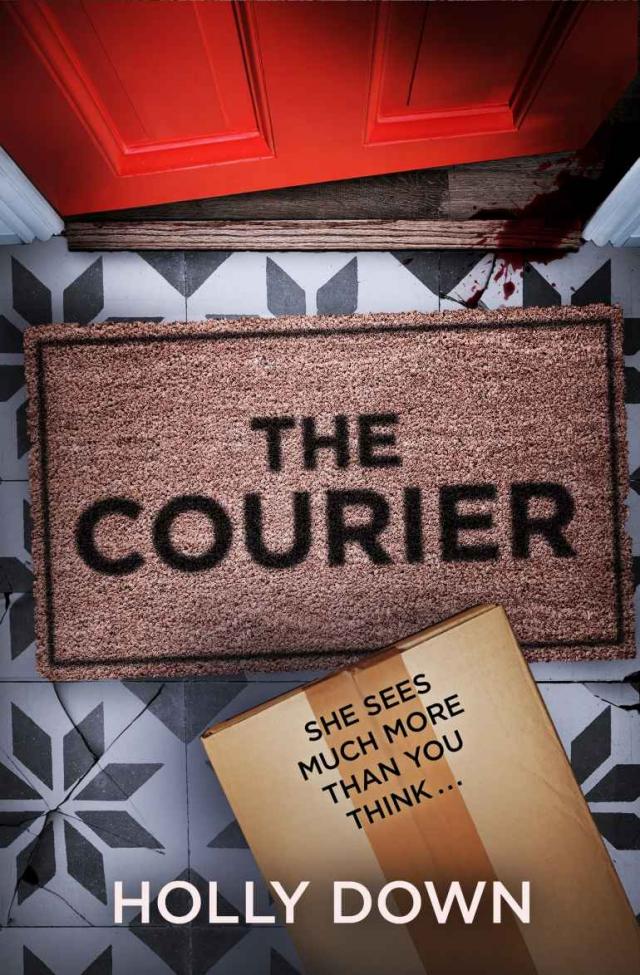
The courier, p.1
The Courier, page 1


About the Author
Holly Down studied PPE at New College, Oxford, and later became a solicitor. She began writing as a hobby at law school, along with hot yoga and marathon running; only the writing has continued. In 2016, Holly undertook a writing course at City University. She and her family live in North London. The Courier is her debut novel.
The Courier
Holly Down
www.hodder.co.uk
First published in Great Britain in 2021 by Hodder & Stoughton
An Hachette UK company
Copyright © Holly Down 2021
The right of Holly Down to be identified as the Author of the Work has been asserted by her in accordance with the Copyright, Designs and Patents Act 1988.
Cover photographic elements © Shutterstock.com. Cover Design by Lydia Blagden © Hodder & Stoughton 2021
All rights reserved. No part of this publication may be reproduced, stored in a retrieval system, or transmitted, in any form or by any means without the prior written permission of the publisher, nor be otherwise circulated in any form of binding or cover other than that in which it is published and without a similar condition being imposed on the subsequent purchaser.
All characters in this publication are fictitious and any resemblance to real persons, living or dead, is purely coincidental.
A CIP catalogue record for this title is available from the British Library
eBook ISBN 978 1 529 36297 8
Paperback ISBN 978 1 529 36295 4
Hodder & Stoughton Ltd
Carmelite House
50 Victoria Embankment
London EC4Y 0DZ
www.hodder.co.uk
For Jodie
CONTENTS
About the Author
Title Page
Copyright
Dedication
Chapter One
Chapter Two
Chapter Three
Chapter Four
Chapter Five
Chapter Six
Chapter Seven
Chapter Eight
Chapter Nine
Chapter Ten
Chapter Eleven
Chapter Twelve
Chapter Thirteen
Chapter Fourteen
Chapter Fifteen
Chapter Sixteen
Chapter Seventeen
Chapter Eighteen
Chapter Nineteen
Chapter Twenty
Chapter Twenty-One
Chapter Twenty-Two
Chapter Twenty-Three
Chapter Twenty-Four
Chapter Twenty-Five
Chapter Twenty-Six
Chapter Twenty-Seven
Chapter Twenty-Eight
Chapter Twenty-Nine
Chapter Thirty
Chapter Thirty-One
Chapter Thirty-Two
Chapter Thirty-Three
Chapter Thirty-Four
Chapter Thirty-Five
Acknowledgements
Chapter One
I always wait until I pick up the packages from the depot to choose my playlist. I match the music to my mood, like a boxer making their entrance before a big fight. This morning there were two parcels for Paradise Found, my favourite street. A day for Power Ballad Classics.
I save those deliveries till the end of my route, to give me something to look forward to. Delivering parcels isn’t the most exciting job in the world but it gives me a chance to get to know new people. A fresh start on every doorstep is how I like to think of it.
Tina Turner is in full flow as I pull up to the gate at Paradise Found. I’m tapping my fingers on the steering wheel, feeling all-powerful from the height of the van’s front seat that’s like sitting on a throne. It’s one of those perfect bright, cold days and I’m belting out the chorus as I pull the handbrake. I wait until the track dies away before switching off the music and entering the key code through the window. The moss-green gate glides open, revealing the row of five imposing houses. I let the van roll inside, taking care not to rev the engine and disturb the peace.
At other deliveries, I aim to execute as quickly as possible: I’ve got it down to thirty seconds when the recipient is at home, two minutes when they’re out. Here, though, I dawdle. There’s something about this street that I’ve fallen in love with, though I wouldn’t like to admit that out loud, and it’s not just the obvious wealth. Of course, it’s nice that the residents take care of their properties – the crocuses in the Bateses’ window boxes are already coming through and the Cohens have had their guttering painted over the weekend – but it’s more than that. It feels like a home.
I hop down from the van and open the back doors. The wire racks are empty apart from the bottom one where I store the Paradise Found deliveries; there’s less chance of something falling and getting damaged down there. There’s a department store box for number one and number five’s monthly contact lens delivery. I’ve been getting to know the inner workings of the households in the six months I’ve been coming here. Deliveries say a lot about you: when your birthday is, roughly when and how much you get paid, what you like to eat and drink, when you get ill and for how long. It’s almost like being part of the family.
I walk to the end of the row first, along the stretch of pavement that runs in front of the small patch of front lawn. The houses are identical – white-painted fronts with glossy black railings – but there are subtle differences that provide character. Evelyn at number two is of the generation that appreciates quality. Her curtains are a luxurious heavy brocade, if a little dated for my taste. The Addo-Smyth family at number three are on a constant hand-me-down cycle as the kids outgrow things. There’s often a bed frame or a table-tennis table left disassembled outside, awaiting council collection. Number four is the Cohens and there are small signs of Bryce’s style everywhere – the rich purple front door, the gold knocker. His husband Harry is more of an antiques man, but I bet inside is fabulous.
I reach number five and take a moment to compose myself. The Bateses are older than my parents and have lived on the street the longest. They bought the house well before London’s property market got silly; it’s amazing the details you can find online. They’re only recent converts to online shopping, so I like to make sure they have a good experience. I hope they close the door and say to each other what a nice young lady, despite me turning forty this year, and tell their friends that they must try home delivery – there’s nothing impersonal about it.
I press the doorbell once and wait. They’re slow movers – their record is almost five minutes between the ring and the door opening – but I don’t like to hustle them. People forget that older people haven’t grown up with online shopping and it does require a degree of trust. You are opening your door to a stranger after all. I strain my ears and hear soft footfalls inside before the sound of the door being unlocked. The top deadbolt seems a little stiff, but that could be the fingers turning it, and when the door opens I’m surprised to see Mrs Bates’s face in the crack; it’s usually her husband at this time of day. She leaves the chain on.
‘Delivery, Mrs Bates,’ I say brightly and loudly. ‘I’m going to need a signature.’
‘Of course. Is that you Laurel?’
‘That’s me.’ I feel a fizz of pleasure that she’s remembered. It’s shocking how many people can open and close their door without actually seeing me, without recognising that another person is there.
I hear the rattle of her undoing the chain and keep smiling while I wait. The door opens another couple of inches. In the tiny gap I can see that the hallway is decorated in an ornate wallpaper with a dark green shag-pile carpet underfoot – nothing I haven’t seen before. Mrs Bates is wearing her lambswool slippers. I shift position, moving from foot to foot in a way I hope isn’t obvious, but the angle isn’t wide enough to see beyond the wall.
‘Here’s your parcel.’ I hand her the narrow box of prescription lenses. ‘All I need now is your signature.’
She takes the plastic stylus – her knuckles are swollen and red and I wonder if it’s arthritis – and reproduces her signature in copperplate lettering on the screen. Young people barely bother with a squiggle, usually without looking up from their phone. Once the transaction is over and the door begins to close, I feel a sudden desperation to prolong it. The day has been a brisk one and there haven’t been many opportunities to chat.
‘Lovely flowers,’ I say. ‘Nice to see a bit of colour already.’
The door wavers. A slight frown crosses her face but it softens when she sees my look of admiration. ‘Thank you. It has been a mild winter hasn’t it?’
She doesn’t wait for me to reply and there’s a click as the door shuts and then the rattle of the chain and the turning of locks. The Bateses are probably not planning on venturing out again this evening and I don’t blame them; it’s starting to get cold. I stare at the purple buds emerging from the planter for another few seconds, wondering if they’ll survive the February chill, before striding back along the row to number one.
I don’t like to play favourites, but Patrick Williams is the resident who intrigues me the most. Ten years ago his novel was a smash hit. Back when I got the tube to and from work every day, I remember every other person devouring the words between its distinctive yellow cover. I’ve read the rave reviews. The film was a flop but he must have made a pretty penny: a year later he spent £1.8 million on this house, another titbit I found online. Not a sniff of a sequel as far as I can see and he’s always home; even the Bateses miss a delivery more often than he does. I wonder what he does to keep busy in there, living alone.
His is the shabbiest house. There are little signs of neglect, like the three strands of cobweb in the top-left corner of the front window and the tub of Halloween sweets that has been on the inside sill since October. None of the others would allow that to linger. Patrick always answers quickly. He must have his writing desk on the ground floor. Perhaps he’s typing his next novel as I stand outside. Maybe I’ll feature. I smile at this thought as I press the bell though there’s nothing worth writing about me – nothing good anyway.
I don’t need to look at my watch to know Patrick is taking longer than usual. I hesitate, unsure whether to ring again or keep waiting. I push the bell. I wait a while. I know it’s silly but I’m worried. He’s only mid-forties so there’s unlikely to be anything wrong with him, but this is out of character. Company policy is not to interfere but I like to keep an eye on my regulars so I take out my phone, wondering who I can call. It’s only after another couple of minutes that I think to check whether he’s listed a safe space. I tap through the details and find he has: Take side path. Leave inside green bin.
I feel a frisson of excitement at the change in routine. I’ve never seen anything other than the front of the row before as the others have always selected ‘leave with a neighbour’ as their delivery instruction when they’ve been out. As the end-of-terrace, Patrick’s house has a narrow path alongside it, barred by a wrought-iron gate that I’ve always assumed was locked, but the latch opens easily. Why haven’t I tried it before when I must have been here close to a hundred times? Because that would be prying, I tell myself.
Patrick’s bins are stored against the wall and at the end is another gate. I run my fingertips along the smooth painted wall as I walk to the end. My hands are getting stiff with cold so I push them deep into my pockets. The second gate is locked with a padlock but through the bars I see an overgrown lawn, a rusty barbecue, and the other side of the fence that backs onto the footpath I’m familiar with. The garden is entirely ordinary and this side of the house doesn’t even have windows. I’m disappointed but I tell myself not to be silly. Paradise Found is just another street, after all. And really, it’s none of my business.
I return to the bins and unclip the lid of the green one. It’s empty. I place the package inside and complete the details on my phone so that Patrick receives the instant delivery notification. Once I’m done, I feel deflated. The chill in the air makes me shiver in my thin company-branded fleece and I hug myself, trying to rub some warmth back into my skin.
I know I should leave but my eyes fall on the second bin, and I feel my brain start whirring. It’s gone four. Soon it will be dark but the light hasn’t disappeared yet and the passage isn’t overlooked. I could take a quick peek. It’s amazing the things people throw out these days. It can tell you a lot about them and I would like to get to know Patrick a little better. I do see a lot of him.
I look around me to check I’m alone before lifting the lid and pulling out the first black bag. This isn’t something I make a habit of but I tell myself it’s only rubbish; things that have been discarded, like I have been. I promise myself I’ll only do it this once as I make quick work of the knot. The sulphurous smell of rotten egg makes me gag. On top are several broken shells and a gooey mass of what might have been cake mix. I didn’t have Patrick down as a baker but it just goes to show, you should never judge a book by its cover. I go to close the bag up again but then I spot a sheaf of papers further down, and my pulse quickens. It could be a manuscript. Perhaps I’ll uncover Patrick’s second bestseller that he’s cast aside too hastily. I picture him thanking me profusely for rescuing it, telling me he’ll dedicate it to me – and then catch myself and shake my head at my own silliness.
I scrape the goo to one side and extract the top piece of paper. It’s a letter from a solicitor with a fancy header and a date at the top from 2016. Patrick must have been having a clear-out. I scan the text but it’s just a standard fee quote setting out the hourly rates and disbursement charges. I have several of these in my own files only from a different type of lawyer. This must be from his divorce. His book was dedicated to ‘My darling Maria’ and there’s no darling Maria living at number one, Paradise Found.
I drop the letter back in and flick through the next few sheets. It’s all correspondence – invoices from plumbers and letters from estate agents asking if he wants to sell – nothing of interest. I delve deeper. Beneath the paper, a bathroom bin has clearly been emptied. There’s a squashed bottle of Listerine, a couple of cardboard loo rolls as well as – my fingers fumble – a slippery used condom and—
‘What the hell are you doing?’
I stand up so fast my neck cricks. My face is on fire and that sickeningly familiar feeling of shame I hate so much is spreading across my chest. Patrick is inside the gate with a pile of shopping bags at his feet. His face is twisted in anger and his rimless glasses are steamed up from the exertion. I know I need to act quickly, and my mind races in search of an explanation. What can I say? It’s risky but all I can think of is to lift my hand and tug the silver moon-shaped earring from its hole.
‘I’m sorry. I lost my earring.’ I rub the empty hole with the earring pressed into my palm, praying he won’t spot it. ‘I was leaving your parcel in the safe space and I just popped a crisp packet in your bin when I realised it was missing.’
His expression is a mix of incredulity and disgust. I force myself to hold his gaze and try to convey that this isn’t me, it’s not who I really am. I edge back from the gaping bin bag to distance myself further from my own actions. Patrick is a handsome man – my ‘type’, as they say – the perfect combination of scatter-brained academic and square-jawed aftershave model and I’ve allowed myself to daydream about him on more than one occasion. Needless to say, my daydreams don’t contain moments like this.
He still hasn’t spoken so I go on, my words coming out in a rush. ‘I thought I felt it come out when I bent down and it has sentimental value. It was a gift from my husband, my ex – well, he died so . . .’ It’s always hard to find the right words.
Patrick pushes his hand through his thick, salt-and-pepper hair and pushes his glasses up his nose. The intensity of his stare makes me shift uncomfortably and there’s a moment where I see I’m in the balance – my job, everything, is in his hands – then his expression lifts and I feel a swoop of relief. ‘I’m sorry, gosh. Can I help you look?’
I dump the bag back into the bin and let my earring fall inside. ‘Don’t worry. Maybe it came out in the van.’
It’s cold enough now to see our breath, and it’s time to go home. My body feels wrung out from the tension. I open the recycling bin and lift out Patrick’s package, trying to hide the tremors in my hands. ‘I can bring this to the door if you need a hand?’
He picks up his shopping bags and tries to figure out a way to carry the box too before nodding and saying stiffly, ‘That would be helpful.’
For ten seconds it feels like we could be an ordinary couple, returning home from a trip to the supermarket. Perhaps we’ve bought steaks and a bottle of red, maybe a cheesecake for dessert – my favourite, but they’re always too big for one. The silly fantasy warms me and the panicky feeling fades. I watch as Patrick unlocks the deadbolt first, then the Yale. There’s no alarm. He steps into the dark hallway and deposits the plastic bags inside before returning for the package but I don’t leave right away. I need to make him understand.
‘I’m sorry about before. I would never have done that if it hadn’t been so important to me.’ My hand returns to my lobe and I rub some heat into the bare skin.
‘I understand,’ Patrick says, and he meets my gaze. ‘I really do.’
As his eyes bore into mine it’s as though he’s trying to communicate something to me, and we share a moment that makes me think that Patrick knows loss intimately, in the same way I do. But then the moment is over; he doesn’t invite me in or even turn on the light. I’ve only seen a glimpse of the hallway and now his back garden. It’s the kitchen I’d like to see, and the bedroom: the heart and soul of the home respectively. But I know they will have to remain the stuff of my daydreams.






